
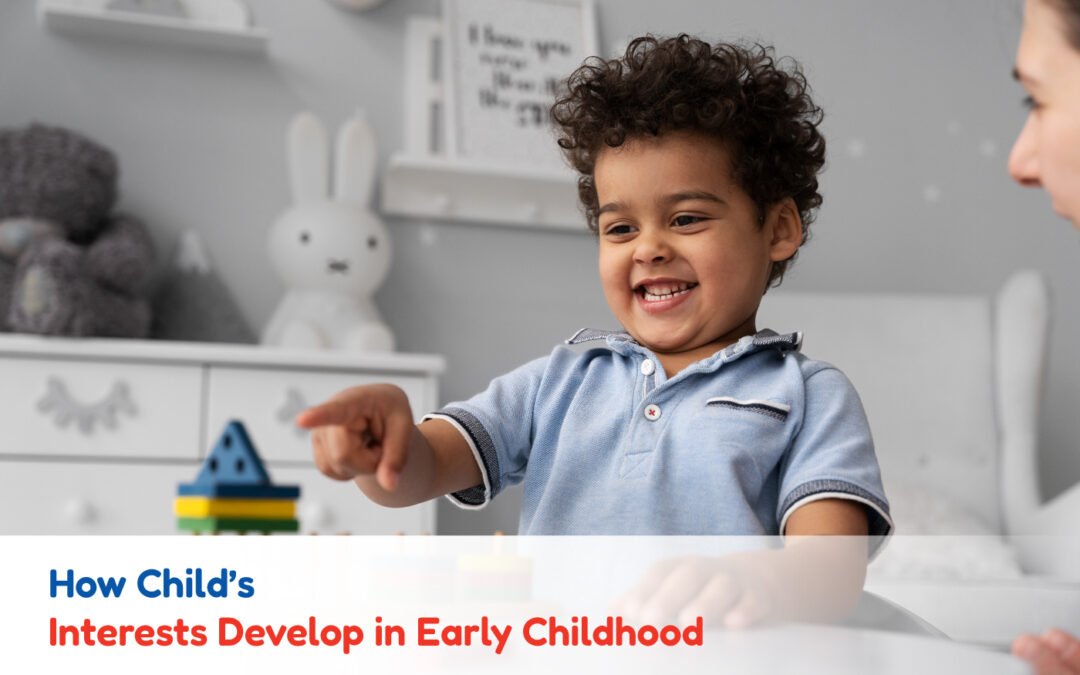
Child’s interests begin forming long before they can name them. In early childhood, interests develop through repeated experiences, curiosity-driven exploration, and emotional safety rather than formal instruction. Understanding how child’s interests during early childhood helps parents and educators support learning in a way that feels natural and sustainable.
Early childhood is not about directing what children should like. It is about creating conditions where curiosity can surface and evolve into genuine interest. Understanding how children’s interests develop in early childhood builds on the broader idea of children’s interests in preschool, where daily exploration, play, and emotional safety form the foundation for learning.
https://kidscastlepreschool.net/childrens-interests-develop-in-preschool/
What Are Child’s Interests in Early Childhood?
Children’s interests are the activities, objects, sounds, or experiences that naturally draw their attention and engagement over time. In early childhood, interests often appear as repeated choices rather than verbal preferences.
These interests may include:
● Returning to the same activity repeatedly
● Spending longer periods focused on certain materials
● Showing excitement around specific sounds, stories, or movements
● Observing peers closely during particular activities
At this stage, interests are fluid. They may deepen, shift, or fade depending on exposure and environment.
How Early Experiences Shape Child’s Interests
Child’s interests develop through everyday experiences rather than structured lessons. Exposure plays a key role. When children encounter materials, sounds, or interactions repeatedly, familiarity builds comfort, and comfort encourages curiosity.
According to UNICEF India, early childhood development is strongly influenced by opportunities for play, exploration, and emotionally supportive environments that allow children to engage at their own pace.
The Role of Curiosity in Early Childhood Interest Development
Curiosity is the starting point of interest. In early childhood, curiosity shows up as watching, touching, experimenting, and asking questions through action rather than words.
When curiosity is met with:
● Time
● Emotional safety
● Freedom to explore
It naturally deepens. When curiosity is rushed or redirected too quickly, interest may not have the opportunity to form fully.
This is why early childhood learning environments prioritise exploration over outcomes.
How Play Supports the Development of Child’s Interests
Play is one of the most important ways children discover what interests them. Through play, children experiment, repeat actions, and test ideas at their own pace.
Unstructured, open-ended play allows children to:
- Return to activities they enjoy
- Spend longer periods focused on what interests them
- Explore without fear of getting things “wrong”
Over time, this repetition helps transform momentary curiosity into lasting interest.
In a playgroup setting, children explore alongside others and begin discovering what naturally captures their interest.
Social Interaction and the Growth of Child’s Interests
Child’s interests are also influenced by observing and interacting with others. In early childhood, children often become interested in activities simply because they see peers enjoying them.
Social interaction introduces children to:
● New ideas and materials
● Different ways of engaging with the same activity
● Shared discovery without instruction
This observational learning allows interests to develop organically, without adult direction.
Why Emotional Safety Is Essential for Interest Development
Children are more likely to explore when they feel emotionally secure. A calm, supportive environment encourages children to take initiative, revisit activities, and follow their curiosity.
When children feel safe:
● They make choices more confidently
● They engage more deeply with activities
● They are willing to explore unfamiliar experiences
Emotional safety is not separate from learning; it is foundational to how interests form.
How Adults Can Support Child’s Interests in Early Childhood
Adults play an important role by observing rather than directing. Supporting children’s interests does not mean introducing new activities constantly. It means noticing patterns and allowing space for exploration.
Supportive actions include:
● Providing time for uninterrupted play
● Offering materials related to observed interests
● Allowing repetition without rushing progress
● Acknowledging curiosity without steering outcomes
When adults follow a child’s lead, interest development feels natural and empowering.
Why Understanding Child’s Interests Matters in Early Childhood
Children’s interests influence how they engage with learning, relationships, and new experiences. When children are encouraged to explore what interests them, they develop confidence in their choices and a positive relationship with learning.
Early support of child’s interests helps build:
● Curiosity
● Focus
● Confidence
● A sense of agency
These foundations extend well beyond early childhood.
Conclusion
Child’s interests develop in early childhood through curiosity, play, social interaction, and emotionally supportive environments. Rather than being taught, interests emerge when children are given the freedom to explore at their own pace. By observing, supporting, and allowing space for discovery, adults help children build lasting engagement with the world around them. At Kids Castle Preschool, this approach comes alive through play-based learning experiences that encourage exploration, creativity, and confidence, helping every child discover what excites them naturally.